 Timing & payouts desk
Live Game Shows Explained: Crazy Time, Monopoly Live and How They Pay
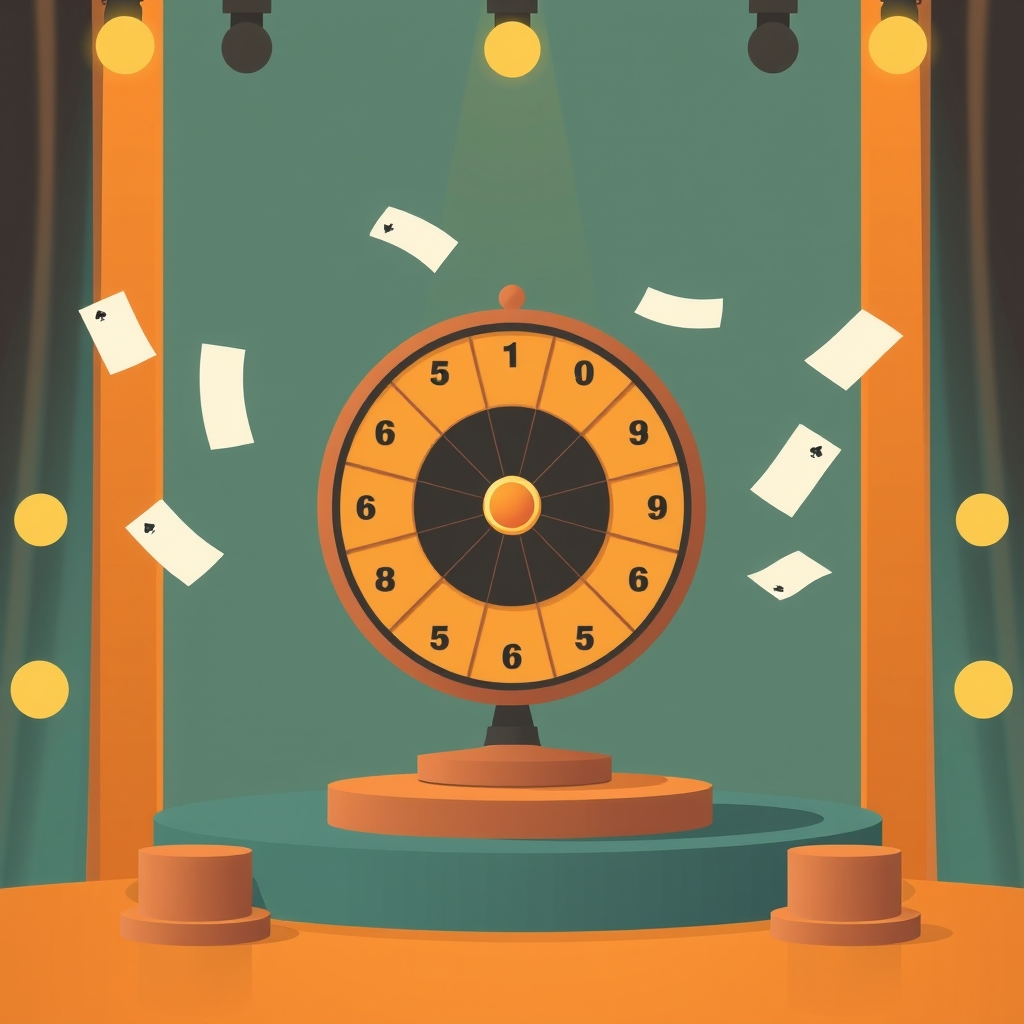
If you have wandered into the live section of an online casino in the last couple of years, you have probably noticed something that looks more like late-night TV than a card table. A presenter in a bright studio, a giant wheel, sound effects, the works. These are live game shows, and they have quietly become one of the most popular formats around. Crazy Time and Monopoly Live get most of the attention, but the category is bigger than those two.
The appeal is obvious enough. You do not need to learn a strategy chart or memorise odds. You bet on where you think a wheel will stop, you watch a real human spin it, and you find out in about ninety seconds whether you were right. It is closer to playing the lottery with a live host than it is to blackjack. That simplicity is the whole pitch, and it is also why these games deserve a clearer explanation than the flashing graphics tend to give you.
How the game-show format actually works
Strip away the lights and a live game show is built from a handful of repeating parts.
- A physical prop. Usually a wheel, sometimes a board or a money drop machine. The result is generated by a real spin, not a software random number generator, which is part of why people trust them.
- A betting window. Before each round you place chips on the outcomes you fancy. Once the host says betting is closed, that is it.
- A base game. The main wheel lands on a number or a colour, and that pays a fixed multiplier.
- Bonus rounds. This is where the format earns its name. Land on a special segment and the game cuts away to a mini-game, often with much larger multipliers attached.
Crazy Time is the clearest example. The main wheel has numbers (1, 2, 5, 10) plus four bonus segments: Cash Hunt, Pachinko, Coin Flip and the headline Crazy Time round. If the wheel stops on a bonus and you had a bet on it, you get pulled into a separate game with its own multipliers. Miss the bonus and your bet on it is gone, even if the number bets paid out.
Monopoly Live uses the same skeleton with a different costume. A wheel decides the base result, and the “Chance” and “2 Rolls / 4 Rolls” segments trigger a 3D bonus where Mr Monopoly walks around a virtual board collecting multipliers for you. The mechanics are simple; the presentation does the heavy lifting.
A few formats side by side
The category has grown well past the original two titles. Here is a rough comparison of how some of the better-known shows are built and what kind of player they suit.
| Game | Core mechanic | Bonus rounds | Pace | Volatility |
|---|---|---|---|---|
| Crazy Time | Number wheel + flapper | 4 (Cash Hunt, Pachinko, Coin Flip, Crazy Time) | Slow, theatrical | Very high |
| Monopoly Live | Number wheel | Chance + board-walk bonus | Medium | High |
| Dream Catcher | Pure number wheel | None | Fast | Medium |
| Mega Wheel | Number wheel + random multipliers | None | Fast | Medium-high |
| Lightning Roulette | Roulette + struck multipliers | None | Medium | Higher than standard roulette |
The pattern is easy to read once you see it. Games without bonus rounds, like Dream Catcher, are steadier and quicker. The marquee titles with bonuses swing harder: long stretches of small or losing spins, then an occasional bonus that can pay a lot. Neither is “better,” they just feel completely different to play.
Fairness, RTP and what the numbers mean
Here is the part the studio lights tend to skip. Every one of these games has a published Return to Player figure, and on the bonus-heavy ones, that headline number hides a lot.
Take Crazy Time. The overall RTP sits in the mid-nineties, but it is different for every bet. Betting only on the number 1 has a higher theoretical return than betting only on the Crazy Time bonus, because the rare big payouts are funded by all the spins where the bonus never lands. The big multipliers you see in clips are real, but they are also why the small bets feel like they bleed away.
RTP is a long-run average over millions of spins, not a promise about your session. A game can advertise 96% and still take all your money in an evening, because variance does what variance does. The UK Gambling Commission is fairly blunt about this in its guidance to players: gambling products are designed so the operator wins over time, and no format changes that maths. You can read their player-facing material at the Gambling Commission.
A couple of things genuinely do support fairness here:
- The results come from physical equipment filmed live, so you can watch the spin happen rather than trusting unseen software.
- Reputable live studios submit their games and RNG-adjacent elements for independent testing. Bodies like eCOGRA audit game fairness and payout accuracy for licensed operators.
- Licensed casinos are required to display the RTP, so you can check it before you bet rather than guess.
None of that makes a game profitable for you. It makes it honest, which is a different thing.
“The most important thing to understand is that these games are entertainment with a cost, not an income source. If you treat a spin like a film ticket rather than an investment, you will make far better decisions about how much to put on it.”
That framing, echoed by support organisations like GamCare, is worth keeping in mind precisely because the format is built to feel exciting on every round.
FAQ
Are live game shows rigged? No reputable, licensed version is. The wheels are physical and filmed in real time, and the studios are independently audited. The house edge is built into the odds openly, not hidden through cheating.
Why did I lose my bonus bet when the number paid out? Each segment is a separate bet. If you stake on both numbers and a bonus, only the segment the wheel actually lands on pays. The others lose, even within the same spin.
Which game is least volatile? The plain number wheels like Dream Catcher. No bonus rounds means smaller swings and more frequent small wins, at the cost of those headline multipliers.
Does a higher RTP mean I will win more? Over an enormous number of spins, a higher RTP loses you slightly less on average. In a single session it tells you almost nothing, because short-run variance dominates.
Can I use a strategy to beat them? Not in any way that overcomes the house edge. You can choose lower-variance bets to make your money last longer, but there is no betting pattern that turns a negative-expectation game positive.
Live game shows are a clever bit of design: a casino product dressed as a TV show, simple enough that anyone can play in seconds. Enjoy them for what they are, check the RTP before you sit down, and set a budget you would be happy to lose to a night of entertainment. If it stops being fun, the help is a click away.